




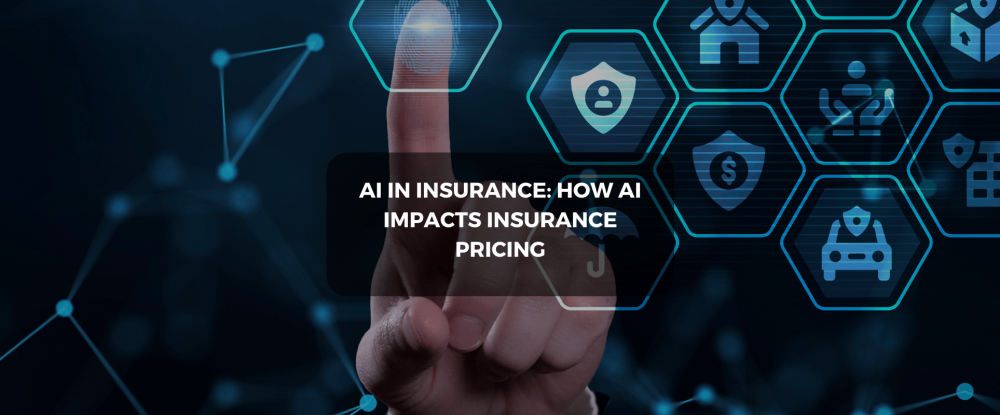
The insurance industry has historically been slow to adopt new technologies, but the benefits of AI in insurance are hard to ignore.
Today’s customers expect greater customization, more personalized insurance rates and significantly increased accuracy in policy tailoring, especially when it comes to their home insurance. This guest article is shared by our carrier partner Max Insurance, who we’re proud to collaborate with in bringing valuable insights to homeowners.
Here’s how.
AI in the Insurance Industry
Although the insurance industry has historically been extremely pen-and-paper driven, and mostly relied upon manual processes, this is starting to change in recent years.
Traditionally, much of insurance’s use of paper-based techniques has been due to regulatory and compliance needs and a more conservative industry culture. Companies may be slower to adopt new technologies, unlike in other industries, given insurance is so risk-averse.
However, many companies have already implemented some forms of AI into their daily business, on a scale from AI-manned chatbots to risk prediction and climate modelling.
How AI Impacts Insurance Pricing
Prior to AI technologies, pricing would be done by grouping customers into broader categories, thereby resulting in potentially overpricing or underpricing certain risks.
With AI, the risk of loss can be analyzed more accurately. By offering a much more detailed profile, AI makes for more personalized insurance rates, better accuracy, and even an improved response to real-world risks, which benefits both the insurer (less unpredictable losses) and policyholders (fairer premiums).
How AI Shapes Canadian Homeowners’ Insurance Experience, Beyond Pricing
AI affects more than just pricing when it comes to insurance. It can also impact how Canadian homeowners interact with insurers, receiving faster quotes, smoother claims service, more accurate fraud detection, and AI-manned phone lines for support when they need it. AI may even help play a role in tailoring policies, supporting brokers in their recommendations and enabling them to handle more leads per head.
Legacy models used for underwriting can often rely on limited or even outdated data. What this means in more basic terms is that when an insurer is gauging a policyholder’s “risk profile” (how likely they are to submit a claim) they do so based on an internal database of statistics. AI, on the other hand, can draw from millions of variables in less than a second, supercharging the underwriting process and generating a quote in just a few minutes.
AI May Be the Key to More Personalized Insurance Rates
Home insurance in Ontario has become increasingly expensive due to an explosion in natural disasters, from flooding to wildfires and beyond. Although many homes have been impacted, many homes have been untouched – but they still may see an increase in their rates, which can seem unjust.
AI in insurance can help further refine today’s outdated models by fairly pricing the homes that are less likely to be impacted by large-scale disasters.
At its core, AI can sound extremely high-tech, but its involvement in the insurance industry is consistently reshaping the customer experience. It can make home insurance easier to acquire, more personalized, and more fairly priced. Quotes may better reflect the true risk of property and consider all the measures you’ve implemented to protect your home, as well as a smoother, more transparent experience overall.
While homeowners may never truly see the algorithms working behind the scenes, AI technology is quietly ensuring policyholders pay the fairest price possible for their insurance. It’s just another way insurers like Max Insurance are working hard and adapting to meet the ever-evolving needs of today’s homeowners.
Looking for the Right Coverage?
Whether you’re exploring smarter, AI-driven fair pricing options with Max Insurance or want personalized advice from the experts at Begin Insurance, we’re here to help you find the protection that fits your needs.