
Winter in Ontario can bring more than just snowbanks and icy roads. It can also bring higher financial risk—especially if you’re only carrying the legal minimum in car insurance liability coverage. While Ontario law requires drivers to carry at least $200,000 in third-party liability coverage, that amount hasn’t changed in decades. Meanwhile, the cost of claims has soared, and winter road conditions only add fuel to the fire.
If you’ve never reviewed your policy limits—or if you’re relying on the bare minimum—you could be exposing yourself to serious financial consequences. Let’s take a closer look at why increasing your liability coverage for winter driving is a smart and affordable way to protect yourself, your family, and your financial future.
In Ontario, third-party liability coverage is a mandatory part of every auto insurance policy. It protects you financially if you’re found legally at fault in a collision that causes:
Bodily injury or death to another person
Property damage to someone else’s vehicle, home, or public property (such as a fence, light post, or guardrail)
Legal costs associated with defending yourself if you’re sued
This coverage steps in to pay the damages and legal fees so you don’t have to—up to the limit of your policy. However, if the total damages exceed that limit, you’re on the hook for the rest.
Ontario’s current legal minimum for liability coverage is $200,000. That may have seemed reasonable in the 1980s, but today it’s far too low for modern claims. A single accident involving multiple vehicles or severe injuries can easily result in damages exceeding $1 million.
Here’s the risk: if a court awards $1.5 million to the injured parties and you only carry $1 million in liability coverage, you’re personally responsible for the remaining $500,000. This shortfall can lead to garnished wages, seized assets, and long-term financial hardship.
Winter driving makes this scenario more likely.
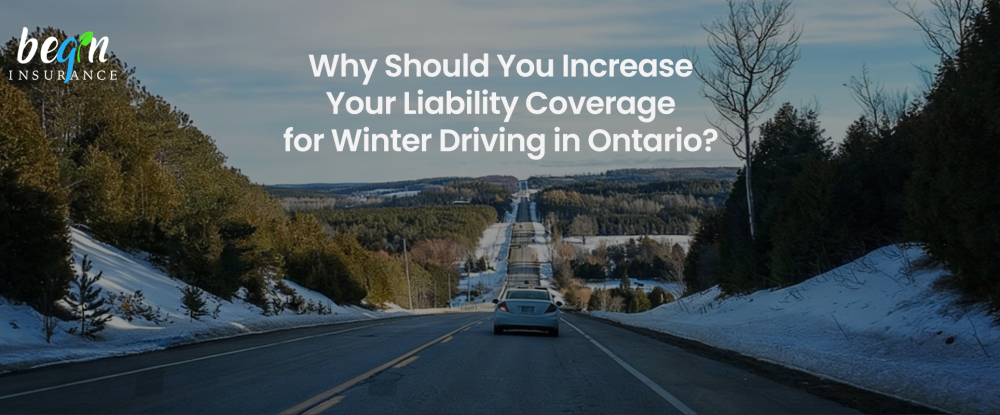
Canadian winters are notorious for treacherous road conditions—black ice, freezing rain, snow squalls, and reduced visibility. These elements don’t just increase the likelihood of a crash; they also increase the severity of the damage when one occurs.
Slippery roads increase the risk of chain-reaction collisions. A five-car pileup involving modern vehicles can rack up repair costs well beyond $200,000—even without factoring in injuries.
Accidents that occur on icy highways or at higher speeds during winter storms often result in serious injuries. These may include long-term disabilities, chronic pain, or even catastrophic injuries requiring lifetime care. The cost of such claims can climb into the millions, factoring in medical treatment, lost income, and pain and suffering.
Even with all-season or winter tires, stopping distances increase substantially on snow and ice. Less time to react means a higher chance of being involved in or causing a collision involving multiple parties—and multiple lawsuits.
Imagine this: you cause a major winter collision, and the court awards $1.2 million in damages to the injured parties. If you’re only covered for the minimum $200,000, your insurer pays that amount, and you’re responsible for the remaining $1 million. The victims—or their insurance companies—can legally sue you for the rest.
That puts your home, your investments, and your future earnings at risk. Once a judgment is granted, creditors can seek to collect by placing liens on your home, garnishing wages, or seizing savings.
Most insurance experts in Ontario recommend carrying at least $1 million in third-party liability coverage. The good news? Increasing your liability coverage is one of the most affordable upgrades you can make to your car insurance policy.
Many drivers are surprised to learn that bumping up from $200,000 to $1 million or even $2 million in liability coverage often costs as little as $5 to $20 more per month. Your total premium is influenced far more by your driving record, location, vehicle type, and claims history than by the liability limit itself. When you consider the potential consequences of being underinsured, this small monthly increase is well worth the added protection.
When you raise your liability coverage, you also increase the value of a key optional feature: the Family Protection Endorsement (OPCF 44R). This endorsement protects you and your immediate family if you’re injured in a crash caused by an underinsured driver.
Here’s how it works: If someone with only $200,000 in liability coverage causes an accident that leaves you or a family member seriously injured, your Family Protection Endorsement steps in. It covers the difference—up to the limit of your own liability coverage.
So, if you carry $2 million in liability coverage, you and your loved ones are covered up to $2 million—even if the at-fault driver carries only the legal minimum.
Raising your liability coverage is quick, easy, and doesn’t require overhauling your entire policy. Follow these steps:
Look at your pink insurance slip or policy declaration page to see how much liability coverage you currently carry.
Ask them to provide quotes for increasing your coverage to $1 million and $2 million.
Evaluate the annual premium difference and weigh it against the added protection. In most cases, you’ll find that the extra cost is minimal.
Get ahead of the season and secure your protection before the snow and ice take over Ontario’s roads.
You’re not legally required to carry more than $200,000 in liability coverage in Ontario, but sticking with the minimum is a risky financial gamble—especially in winter. Road conditions are worse, crashes are more severe, and claims costs have never been higher.
Consult with our licensed insurance brokers. At Begin Insurance, we help drivers find comprehensive coverage at the most competitive price by comparing insurance options of more than 18 top insurance companies. Regardless of your driving history or vehicle type, you can trust us to deliver the best personalized solutions for car insurance in Ontario.
We can help you:
Access to competitive rates: We search plans from 18+ top insurance companies to get you the cheapest auto insurance rates available in your area.
Expert guidance: We gladly explain your policy options clearly so you can make an informed decision about your coverage.
Customized coverage solutions: We specialize in finding affordable and reliable coverage for all unique needs, ensuring you get the right plan.
Our experienced car insurance brokers specialize in finding the most suitable insurance for high-risk cars, specialized cars, such as luxury, vintage or commercial cars, motorcycles and personal cars. Also, we help our clients find both mandatory and optional coverages.
To review your existing coverage, tailor it to your specific needs, or find ways to save on your premiums, request a free quote from our experts.

 Posted May 29, 2025